Pattern Options
Direction
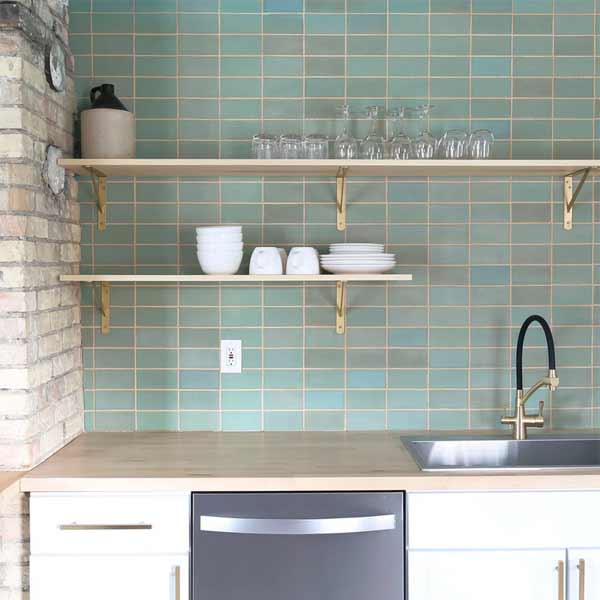
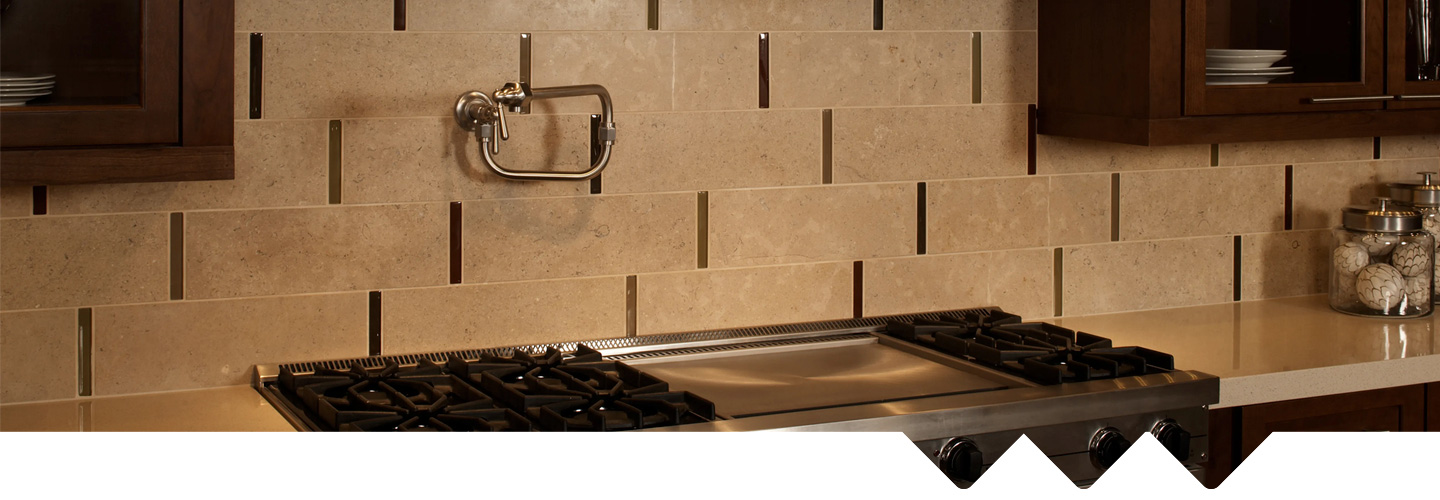
Subway tile is often shown running horizontally, but that is only one way to use it. Direction has a major effect on how a backsplash feels once it is installed. A horizontal layout is the most familiar option. It tends to make the wall feel wider and works well in kitchens where the goal is a classic, balanced look. This is the direction most people picture when they think of subway tile.
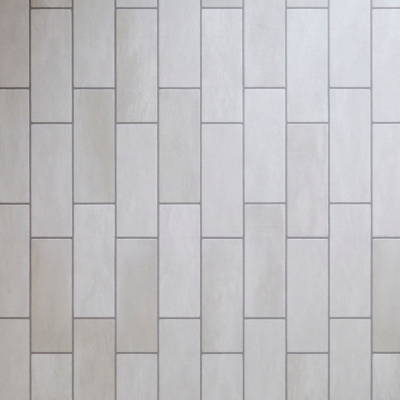
A vertical layout changes the feeling of the space. By turning the tile upward, the backsplash draws the eye higher and can make the wall feel taller. This can be especially useful in kitchens with lower cabinets, open shelving, or areas where you want to create a more elongated look without changing the tile itself.
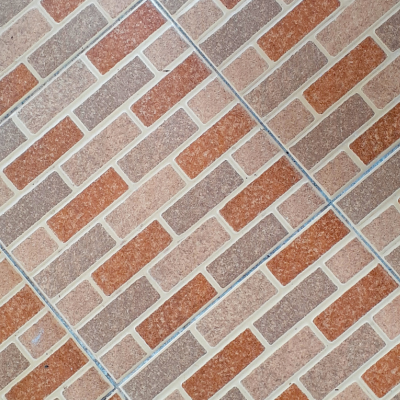
Diagonal subway tile is less common, but it can add movement and visual interest. It is often used when the backsplash is meant to feel more designed or when a specific area needs emphasis. Direction may seem like a simple choice, but it is one of the first decisions that changes how subway tile reads in the finished kitchen.
Vertical
Horizontal
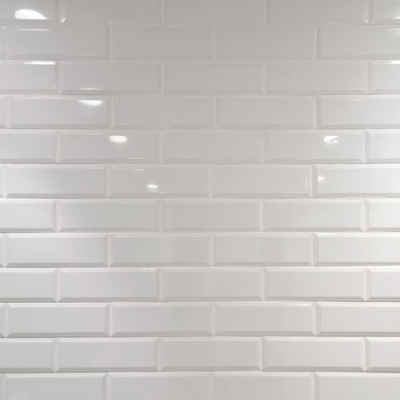
Diagonal
Patterns
Once the direction is chosen, the pattern determines how the subway tile is arranged across the wall. Some patterns are selected more often because they are familiar, flexible, and easy to pair with different countertop and cabinet styles. These are not the only options, but they are some of the most commonly used starting points.
Running bond is the classic subway tile pattern. Each row is staggered from the row above it, creating the traditional brick-like layout most people recognize. It works well when the backsplash is meant to feel timeless and not overly busy.
Herringbone creates more movement. The tiles are arranged at angles, giving the backsplash a stronger sense of pattern and direction. This option often works well when the tile is intended to be more of a feature.
A stacked pattern keeps the tiles aligned in a clean grid, with each joint lining up vertically and horizontally. Depending on the tile, this can feel modern, simple, or more structured. Pattern choice affects whether subway tile blends into the kitchen or becomes a more noticeable part of the design.
Running Bond
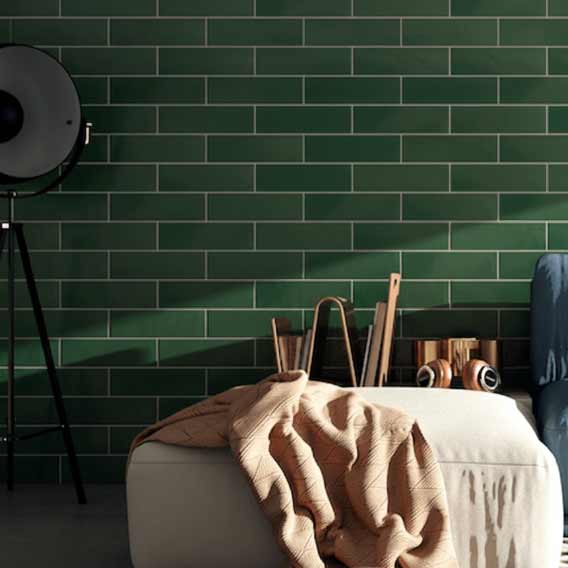
Herringbone
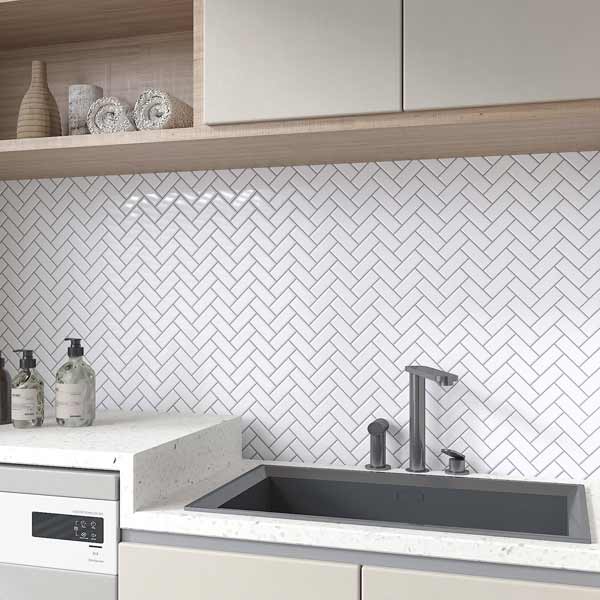
Stack
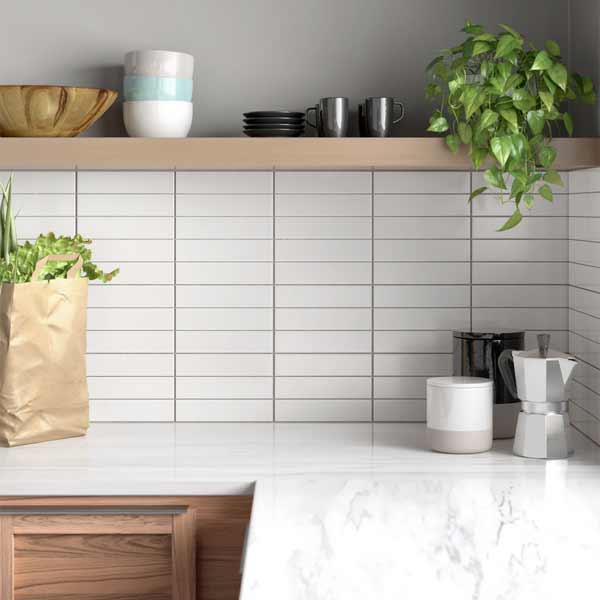
Offset
Offset is one of the tile terms people may not know at first, but it matters a lot with subway tile. It refers to how each row of tile lines up with the row above or below it. In other words, offset controls the stagger. Even when the same subway tile is used, changing the offset can change the entire look of the backsplash.
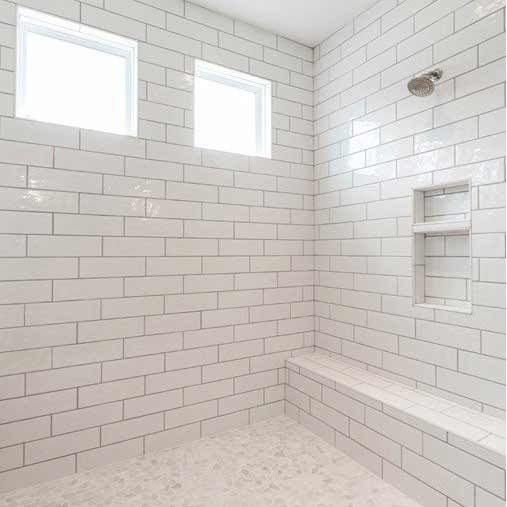
A half offset is the traditional subway tile layout. Each tile is centered over the joint beneath it, creating the familiar brick pattern. This is often what people expect when they picture a classic subway backsplash.
A one-third offset is a more subtle stagger. Instead of each tile shifting halfway over, the rows shift by about a third of the tile length. This can feel a little more controlled and can sometimes work better with longer subway tiles, where a half offset may create too much visual movement.
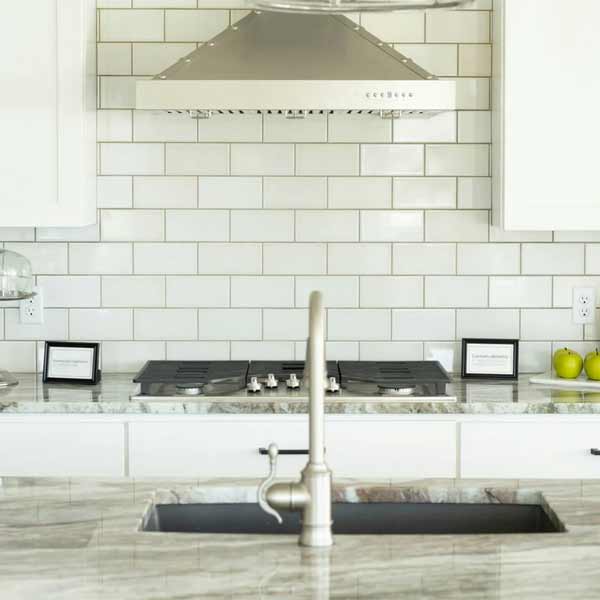
A stacked layout has no offset at all. The tiles line up directly above each other, creating a clean grid. Offset may sound like a small installation detail, but it affects rhythm, balance, and how busy or quiet the backsplash feels once it is on the wall.
1/3
1/2
No Offset (Stacked)